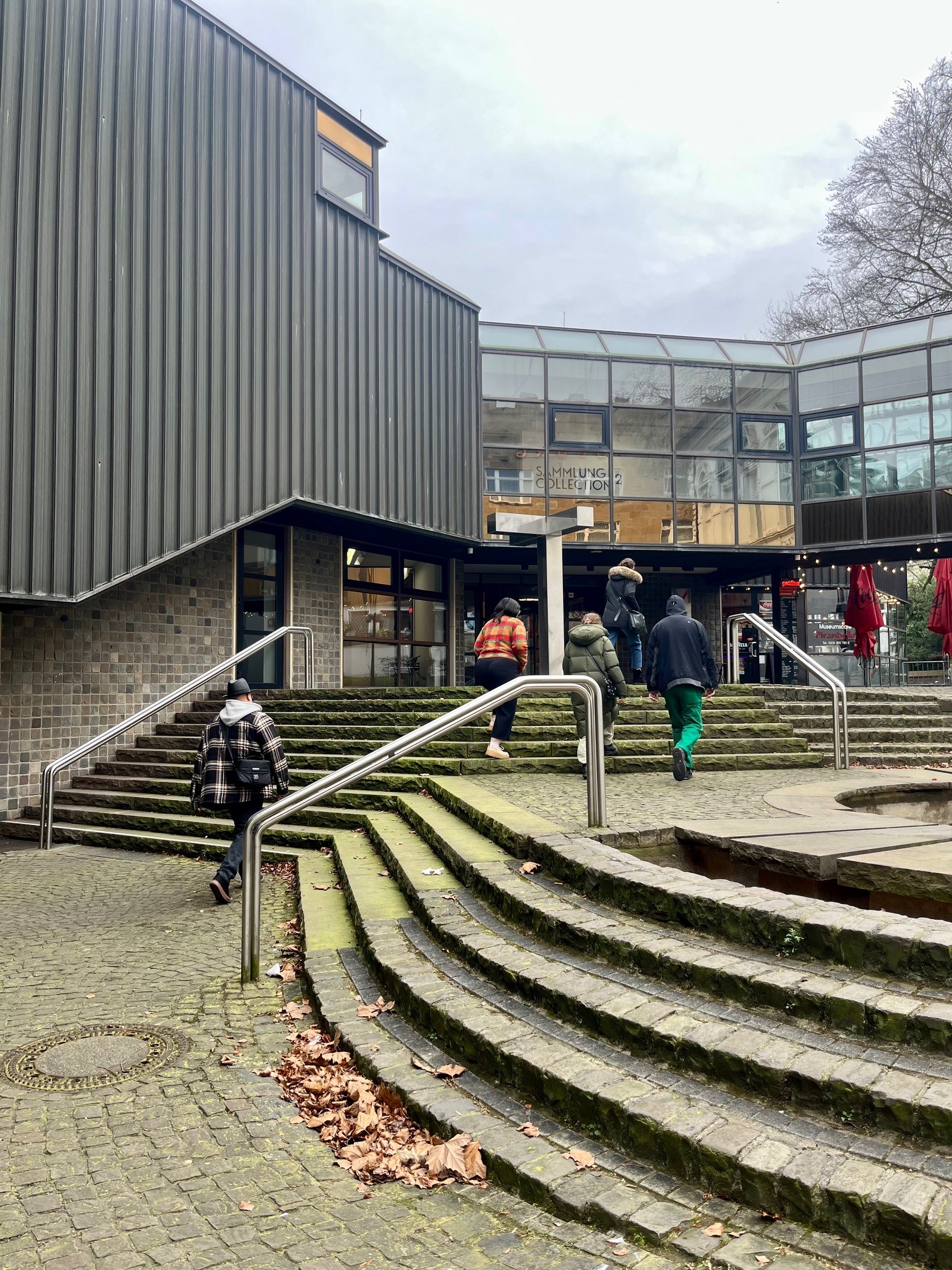
On Thursday, February 20, 2025, the Alfred MFA painting cohort visited the Kunstmuseum Gelsenkirchen in Gelsenkirchen to meet with Julia Höner, the museum director, and be guided on a private tour. The building itself was architecturally unique, built in 1984. The museum director stated that the entryway was meant to deliver “breath and space to invite people in, to be a space for the public.”
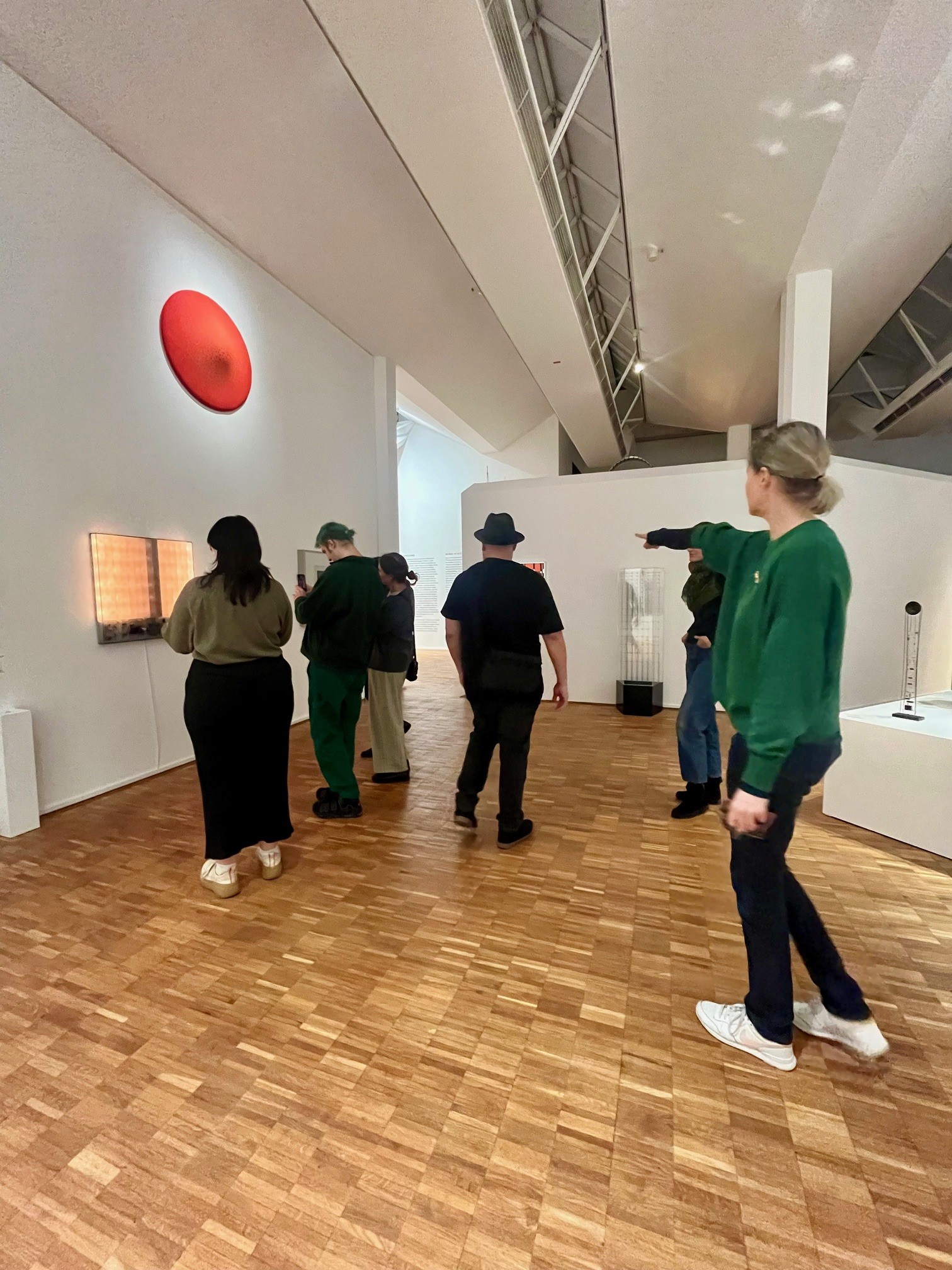
We were guided from room to room, and the director provided insight into the works currently on view. The Kunstmuseum Gelsenkirchen holds one of the largest collections of kinetic art in Europe. The exhibitions were designed so that visitors could activate the works themselves, by pressing buttons stationed next to the works, designed to set the art in motion. Such a structure of art exhibition provides a veritable process of discovery. This interaction with the art makes for a playful experience, one that all age groups can enjoy. Educational programming is strong within the museum, often hosting pre-school and elementary school children, who may be having their first interactions with an art institution.
This engagement with young people is not by accident. The kinetic art on view, a large portion made directly after WWII, was made as art that hoped to rid itself of representation, and away from political means, which would often be in service of government propaganda, The artists making this kinetic work, some the artist group ZERO, had the idea of, in the director’s words, “pushing the art down from its pedestal to become more accessible for the people.” There are a select number of works that the museum encourages its visitors to touch, which in turn impacts the aesthetics of the work.
At the end of the tour, our group visited the basement of the museum – an area converted from storage of kinetic art, into an exhibition space – to see and interact with the work of Alona Rodeh, and their solo exhibition interzone.
📸 Max Heaton


 PAINTING MFA Alfred/Düsseldorf