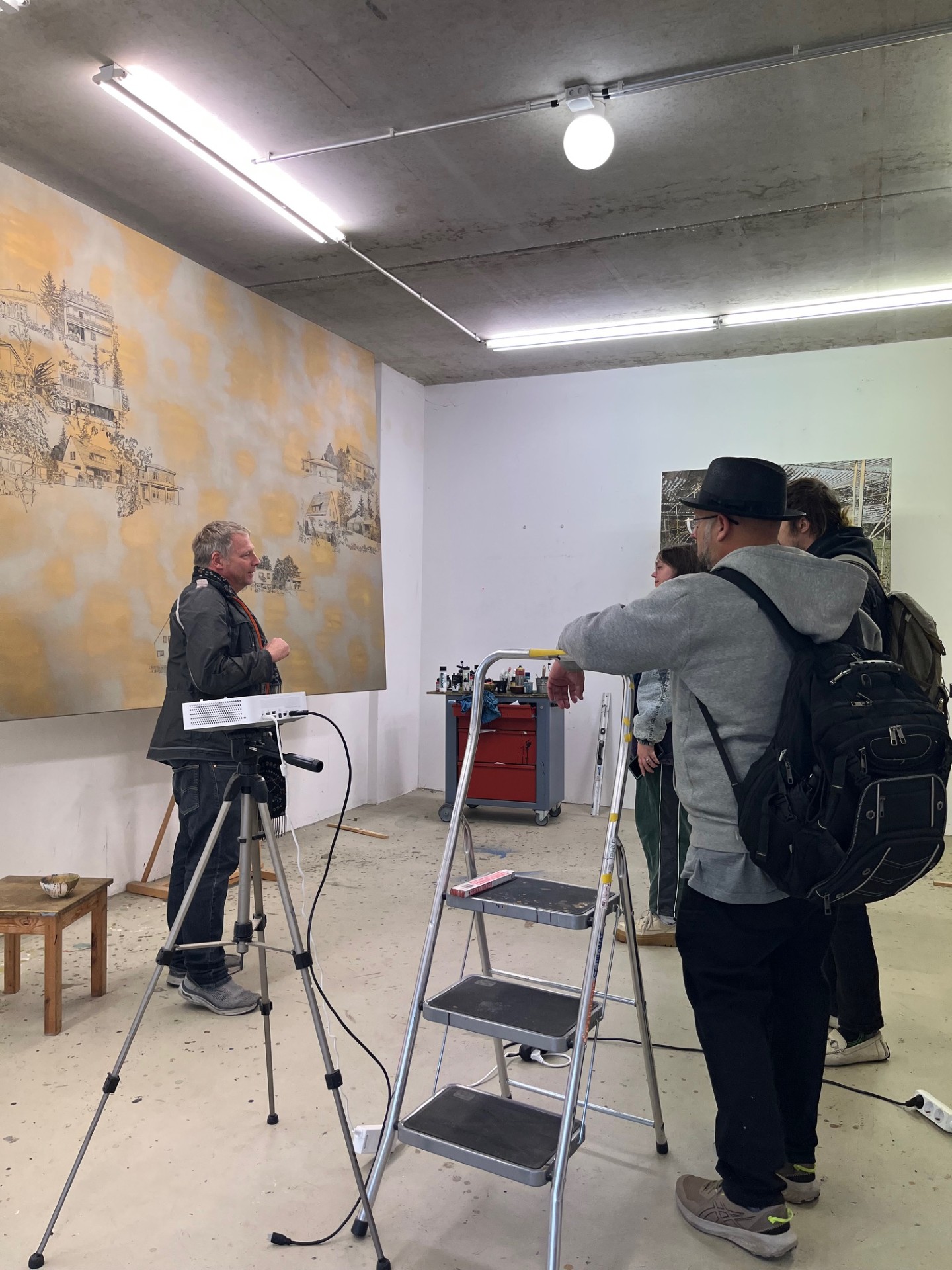
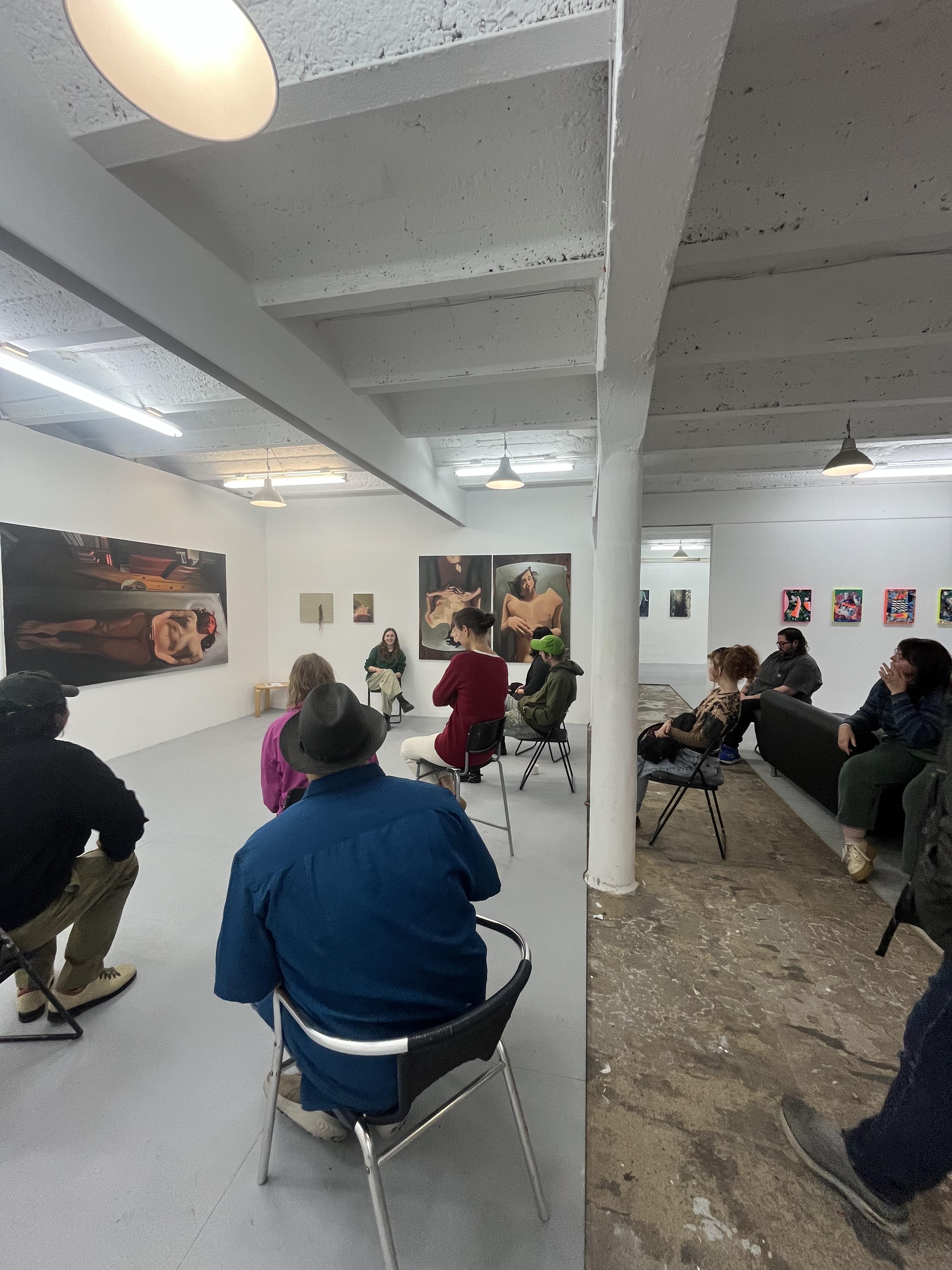
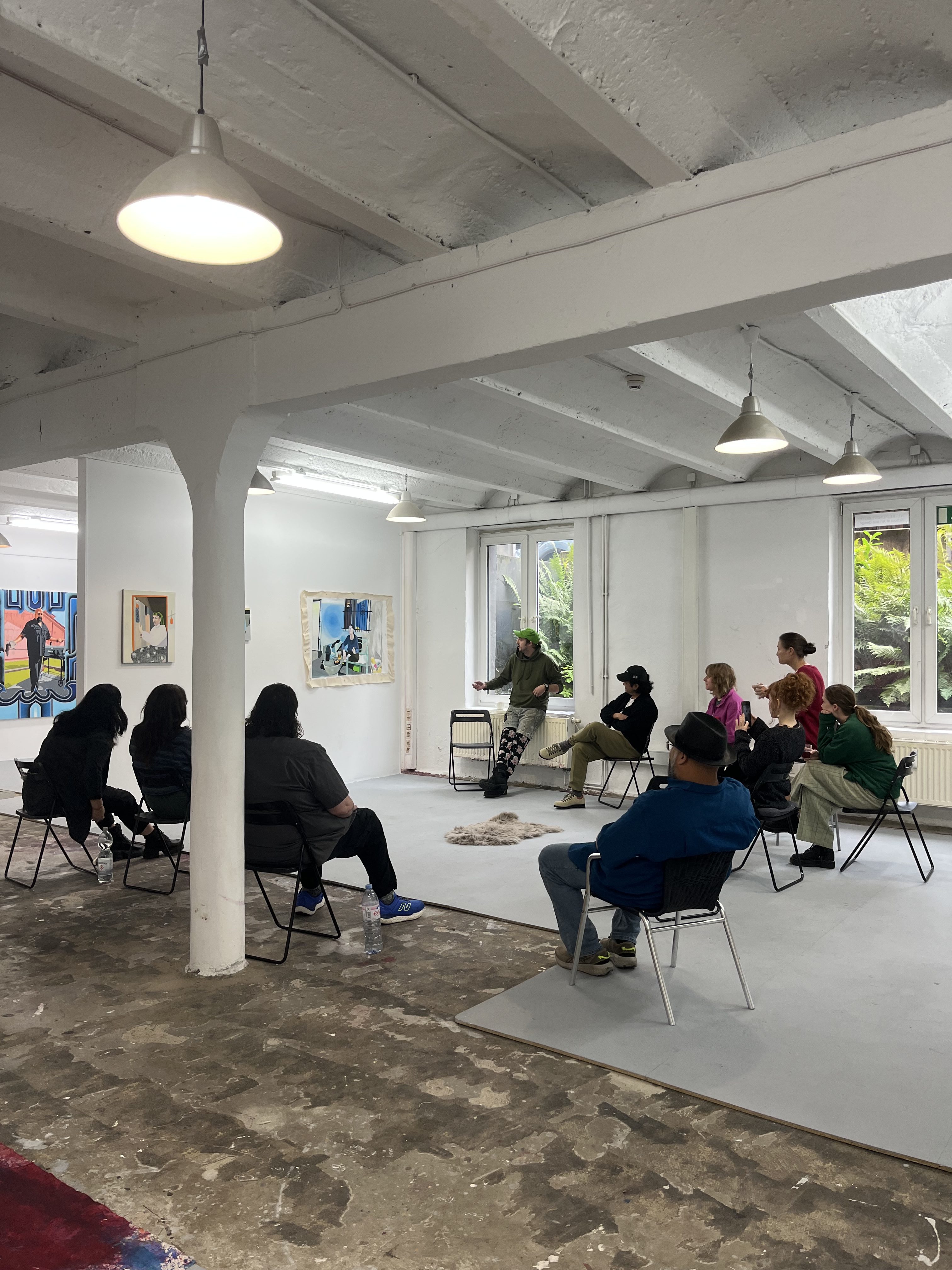
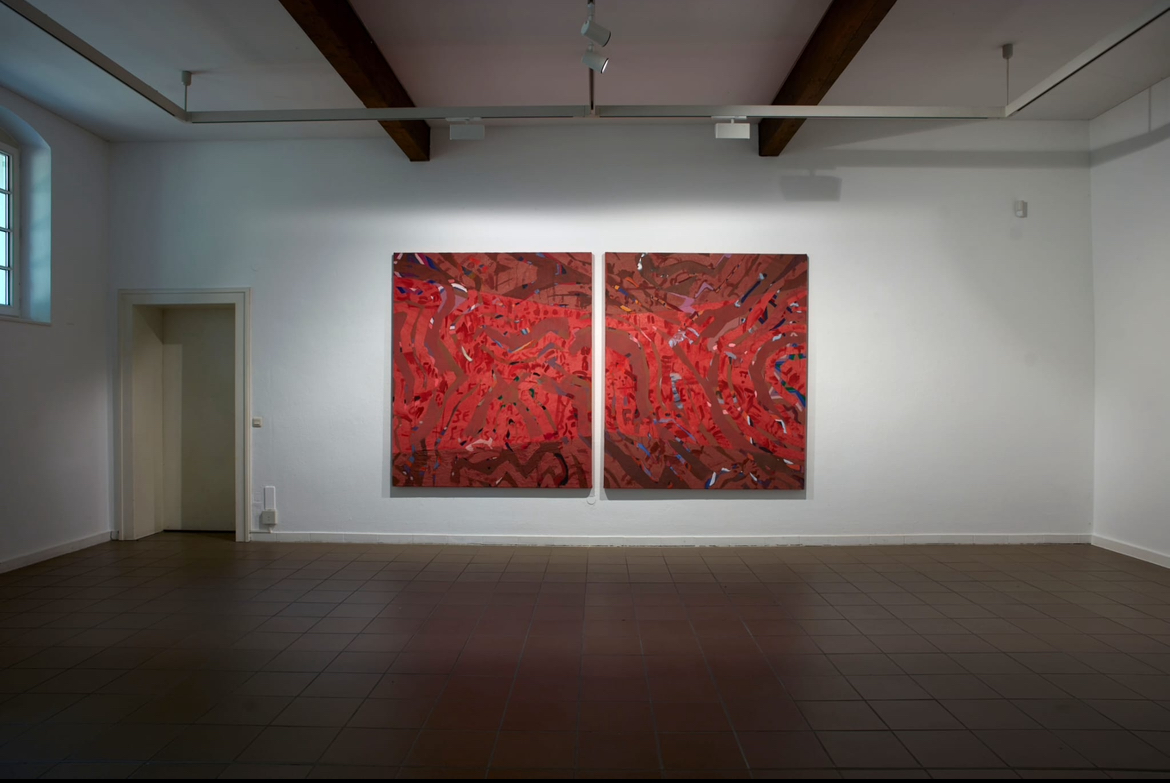
On Friday, September 5, 2025, the 2nd-year MFA cohort visited the Flingern neighborhood of Düsseldorf for the opening of Alfred in Düsseldorf painting faculty, Jutta Haeckel. The show, titled “New Paintings”, is held at boa gallery, short for “based on art”, an artist-run gallery founded by Dunja Evers and Thomas Mass. The opening was a part of the Düsseldorf Cologne Open Galleries event held from 05-07 September 2025. Jutta’s show runs from 05.09.2025 – 24.10.2025. Jutta is an abstract artist who had another solo show at the Hosfelt gallery in San Francisco, California, earlier this year, 2025. As students, we hold the privilege to have Jutta as one of our main paining professors, here in Düsseldorf.

📸 Max Heaton

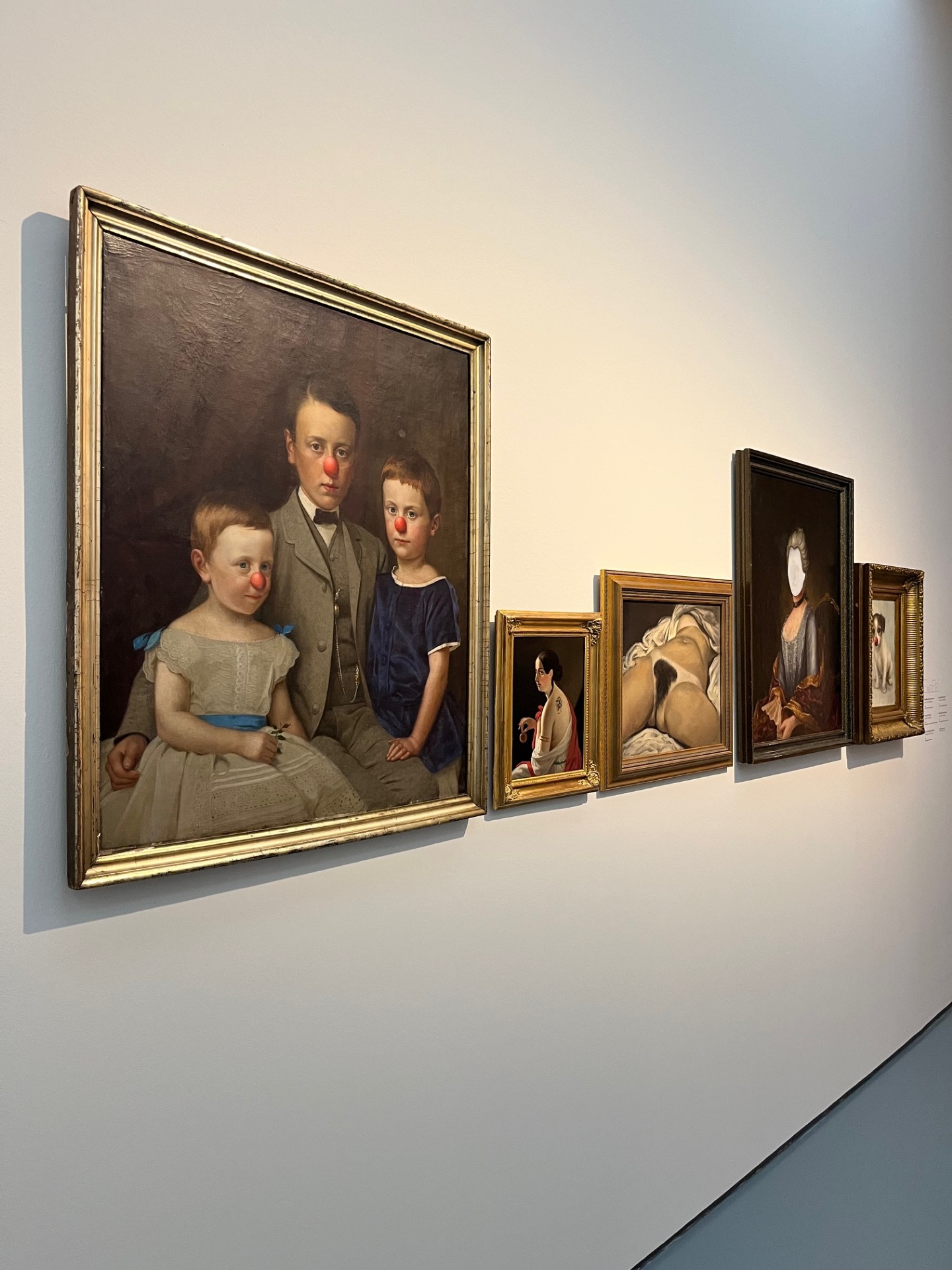
On Tuesday, September 2, 2025, the 2nd-year MFA cohort visited the Kunstverein Leverkusen to visit the show of Alfred in Düsseldorf painting faculty, Katrin Laade. The show is titled “IN DER WELT”; translated to English “IN THE WORLD”. Katrin is an abstract painter, born in Germany, and studied at the world-famous Kunstakademie Düsseldorf and de ateliers in the Netherlands. Katrin keeps her studio in Düsseldorf and works as a dedicated abstract artist. As students, we have the pleasure to join Katrin for various travel opportunities, as she enlightens us to the heart and soul of various European art cities.

📸 Wendelin Bottländer

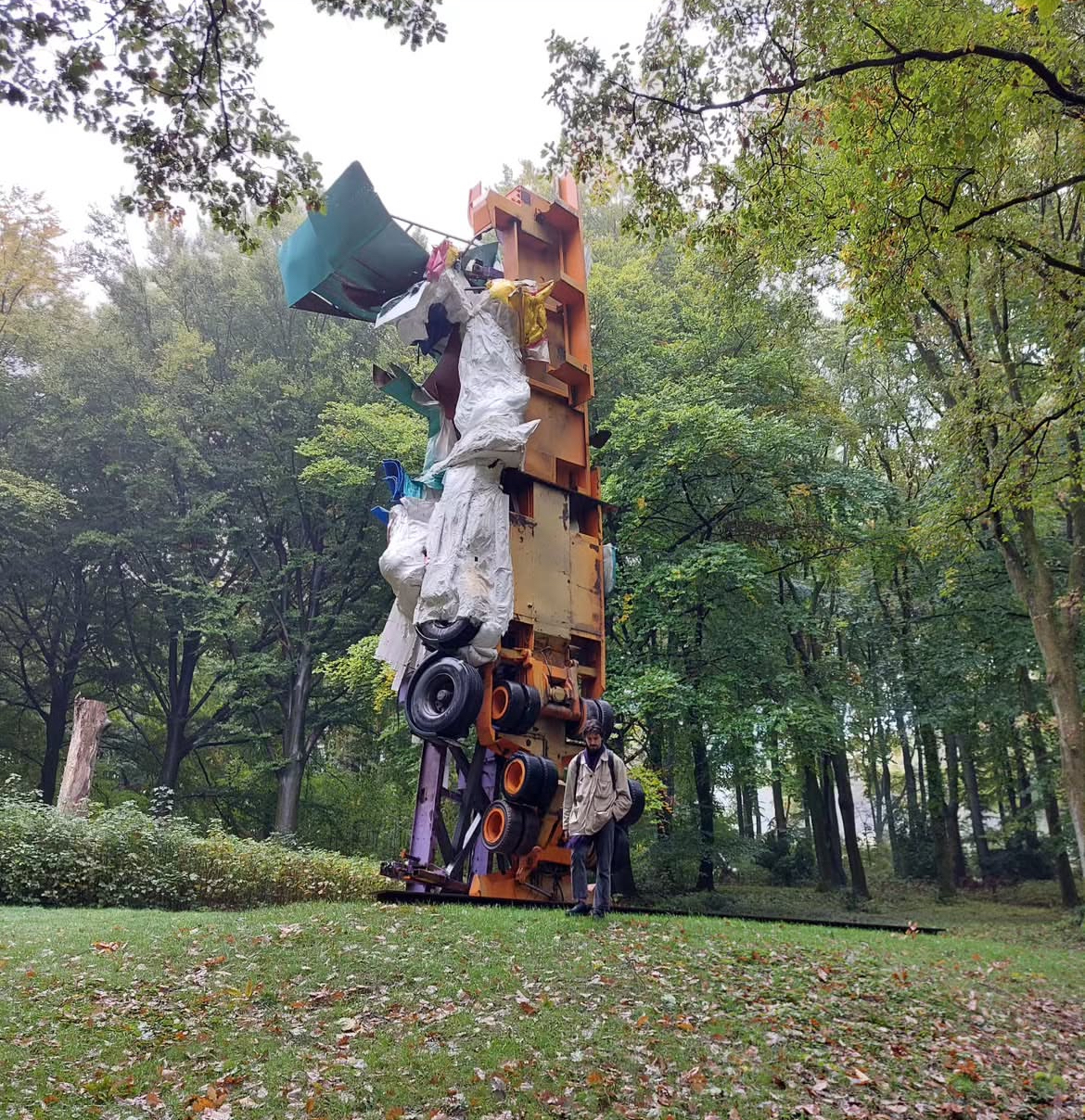
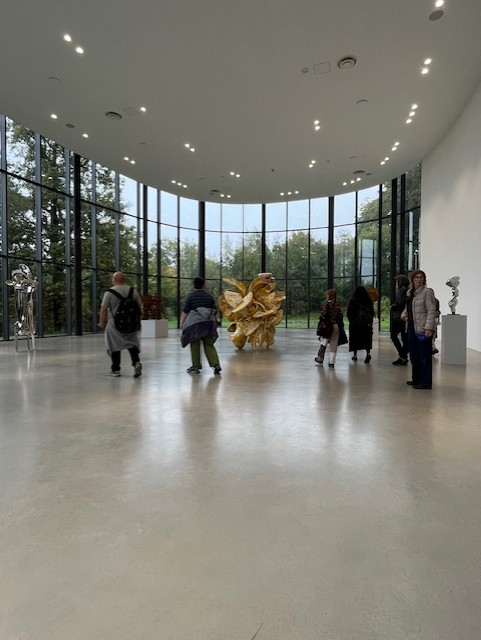
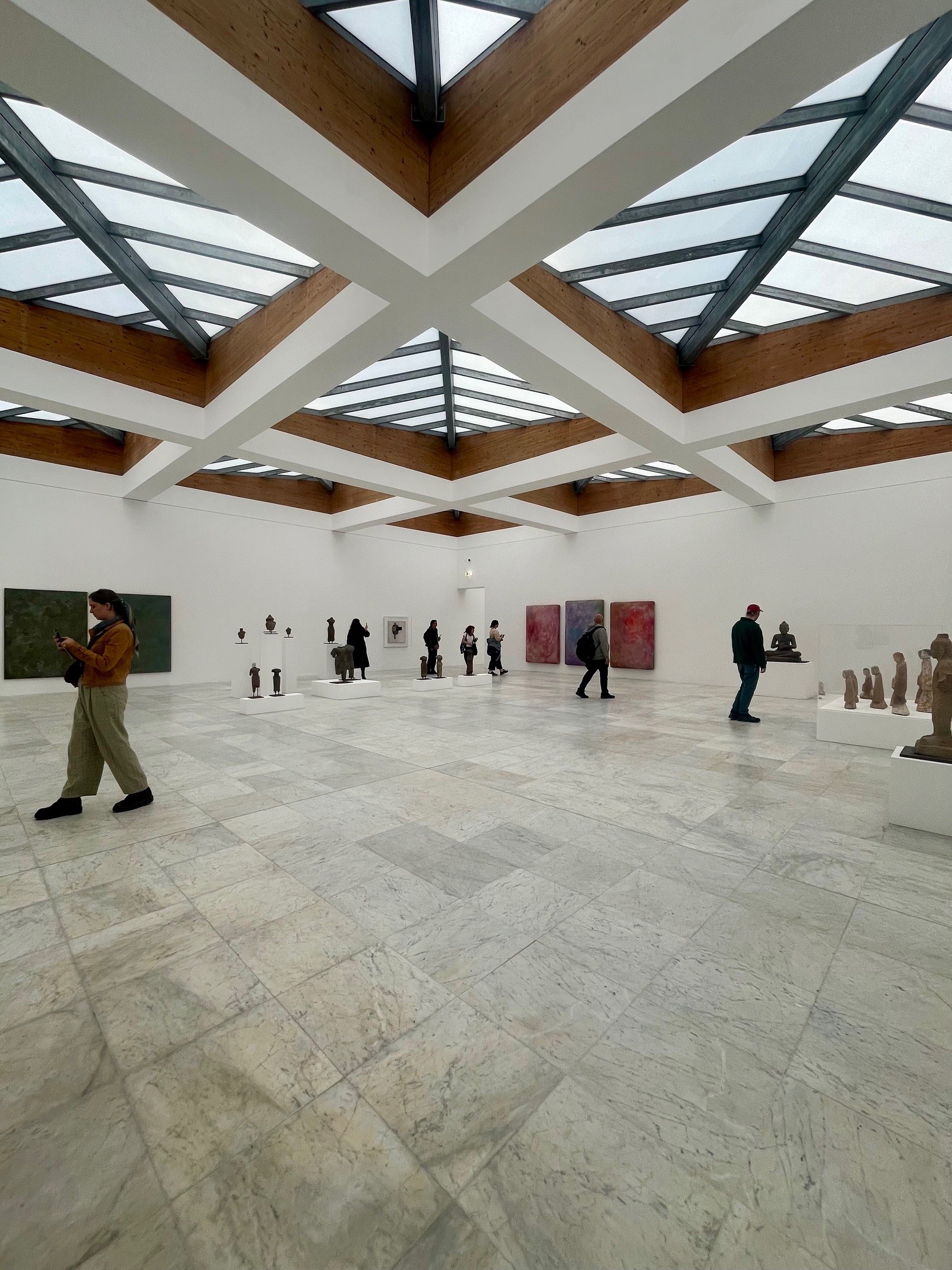
On Tuesday, April 15, the 1st year Alfred MFA painting cohort visited the grounds of Museum Insel Hombroich in Neuss, Germany. The Museum Insel Hombroich is both a park and a museum on over 62 acres of meadowland, combining architecture, art, and nature. From 1982 to 1994, sculptor Erwin Heerich created eleven exhibition pavilions. The various pavilions present both antique art from Asia and modern art, most of which are lit by natural light. The Langen Foundation is on the grounds, where we viewed an exhibition of contemporary art from the Ringier Collection.

📸 Max Heaton

From Monday, March 31 to Friday, April 4, the 1st year Alfred MFA painting cohort visited the amazing city of Paris, France! What an incredible city and rich arts culture – our stay was filled with one amazing experience after the next. Highlights included: Notre-Dame Cathedral of Paris, Chapel Sainte-Chapelle, Musée d’Orsay, Louvre Museum, Musée de l’Orangerie, and all the local galleries! 

We walked along the Seine, enjoyed French food at the cafes, watched the sun go down at Basilique du Sacré-Cœur de Montmartre, and saw legendary installations and artworks by Parisian greats Monet, Manet, and Rodin. Pictured below are The Water Lillies and The Gates of Hell.

The entire group was in awe of the city and were lucky to be there!

📸 Max Heaton

On Wednesday, March 26, the 1st year MFA cohort visited the Kunstverein Leverkusen and Schloss Morsbroich Museum. Many German cities and towns have their own Kunstverein or local art club. Members pay a small annual fee to be a part of the Kunstverein, and have access to art shows and discounted art releases. We were received at the Kunstverein by curator Susanne Wedewer Pampus – we were shown the current exhibition by the art duo Michelle Héon and Gilles Morissette.

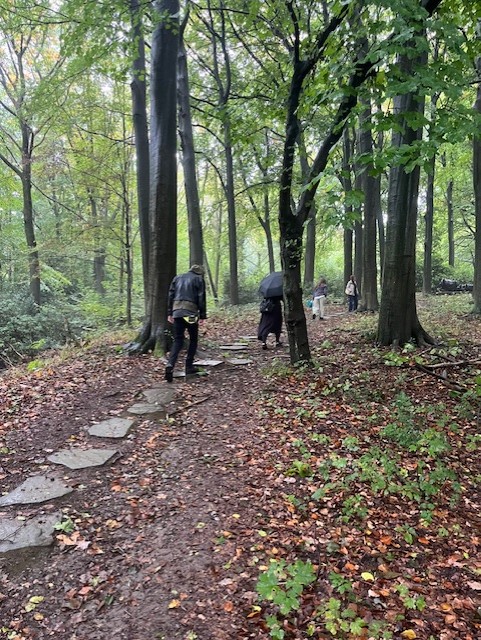
After enjoying the current exhibition, we went on a nature walk through the grounds, enjoying the birds, flowers, and outdoor sculptures. After the nature walk, we entered the Museum Morsbroich to view the exhibition of photographer and video artist Eric Lanz. A unique aspect of the Museum Morsbroich is that they keep their collection openly accessible. The public can view the collection and request works be pulled out and put on view!

📸 Max Heaton

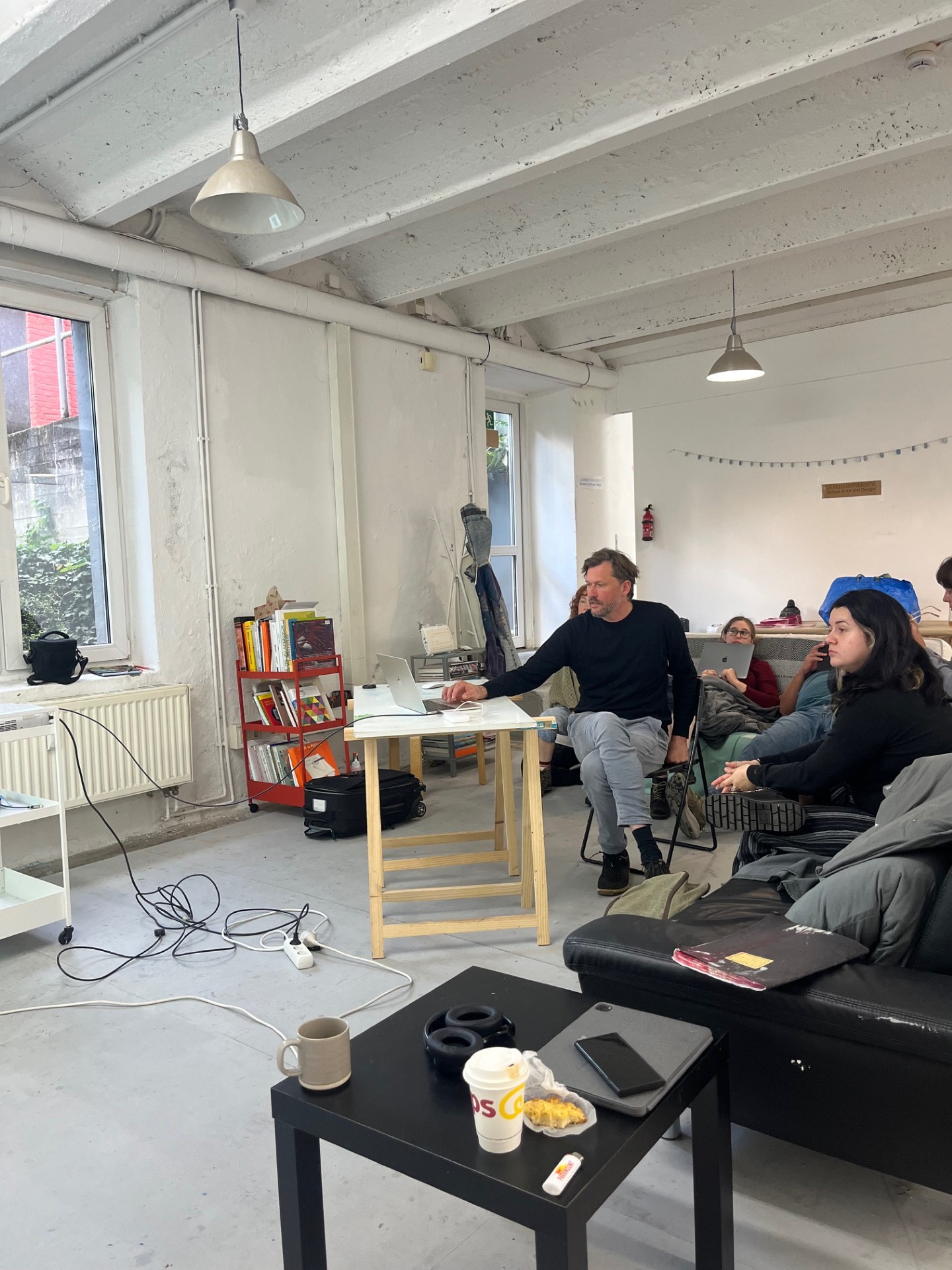
On Wednesday, March 12, the 1st year Alfred MFA painting cohort visited the studio of Düsseldorf artist, Cornelius Quabeck. The next day, Thursday, March 13, Cornelius visited the Oberbilk studio of the Alfred painters, and we each had individual critiques with the visiting artist. Cornelius is a painter, printmaker, and musician. On dedicating oneself to a subject matter, Cornelius states, “Spend time with a subject or object, and new things get revealed.” Cornelius is currently working on a series of skulls. He states, “The skull is not arbitrary, it is about death” and “to work with the skull repeatedly is a way for me to process the concept of death.” As a greater philosophy of art making, Cornelius states, “learn from the experience of art making – to be more confident with what you do as you make the art.”

The next week, on Tuesday, March 18, the 1st year Alfred MFA painting cohort visited the studio of Düsseldorf artist, Paul Schwer. The next day, Wednesday, March 14, Paul visited the Alfred painters, and we each had individual critiques with the visiting artist. Paul is a painter and a sculptor, well-known for his morphed plexiglass works. 

Cornelius and Paul shared their own unique experience and path through the arts. Our exchange with these artists provided different and valuable feedback as we develop our work, fostering our voice.

📸 Max Heaton

Being in Europe means easy train access to many different cities! Last weekend, members of the MFA painting cohort took a voluntary trip to Munich in Bavaria, Germany, for a quick getaway.

From visiting historic beer gardens to sampling the city’s vibrant cuisine, the group fully immersed themselves in Munich’s rich cultural offerings. They arrived on Friday, March 21, for a quick overnight visit, staying in a beautiful Jugendstil (Art Nouveau) apartment just off Prinzregentenplatz in the heart of the theater district. Their first stop was a beer garden near the Chinesischen Turm (Chinese Tower), where they enjoyed hearty Bavarian fare. A leisurely stroll through the Englischer Garten followed, where they befriended some curious ducks, geese, and loons. The weather was perfectly mild, ideal for a Spaziergang—the German word for the art of taking a stroll. Later that evening, they attended a concert at Muffathalle, getting a taste of Munich’s nightlife.

The next day was dedicated entirely to museum visits. The group spent the day exploring Munich’s Museum District, taking advantage of the conveniently clustered world-renowned institutions. They began at the Alte Pinakothek, home to an impressive collection of Old Master paintings, before heading to the contemporary-focused Museum Brandhorst. A major highlight was the museum’s extensive Cy Twombly collection, one of the largest in the world. The entire upper floor was dedicated to his work, featuring both his 2009 Roses series and the monumental Lepanto cycle (2001), displayed in a gallery designed specifically for it. Twombly’s loose, expressive scribbles and poetic inscriptions provided a striking contrast to the grandeur of Rubens and Dürer at the Alte Pinakothek, offering a dynamic balance between the medieval and the contemporary—two sides of the same city.

As the sun set over Munich, the museum squares filled with locals enjoying the golden hour—drinking Weissbier, playing volleyball, and lounging on the grass. On the train ride home, the group couldn’t shake the feeling that one weekend wasn’t quite enough. Munich had more to offer, and they chose to think of this trip not as a farewell, but as a “To Be Continued.”

📸 Erin Keating

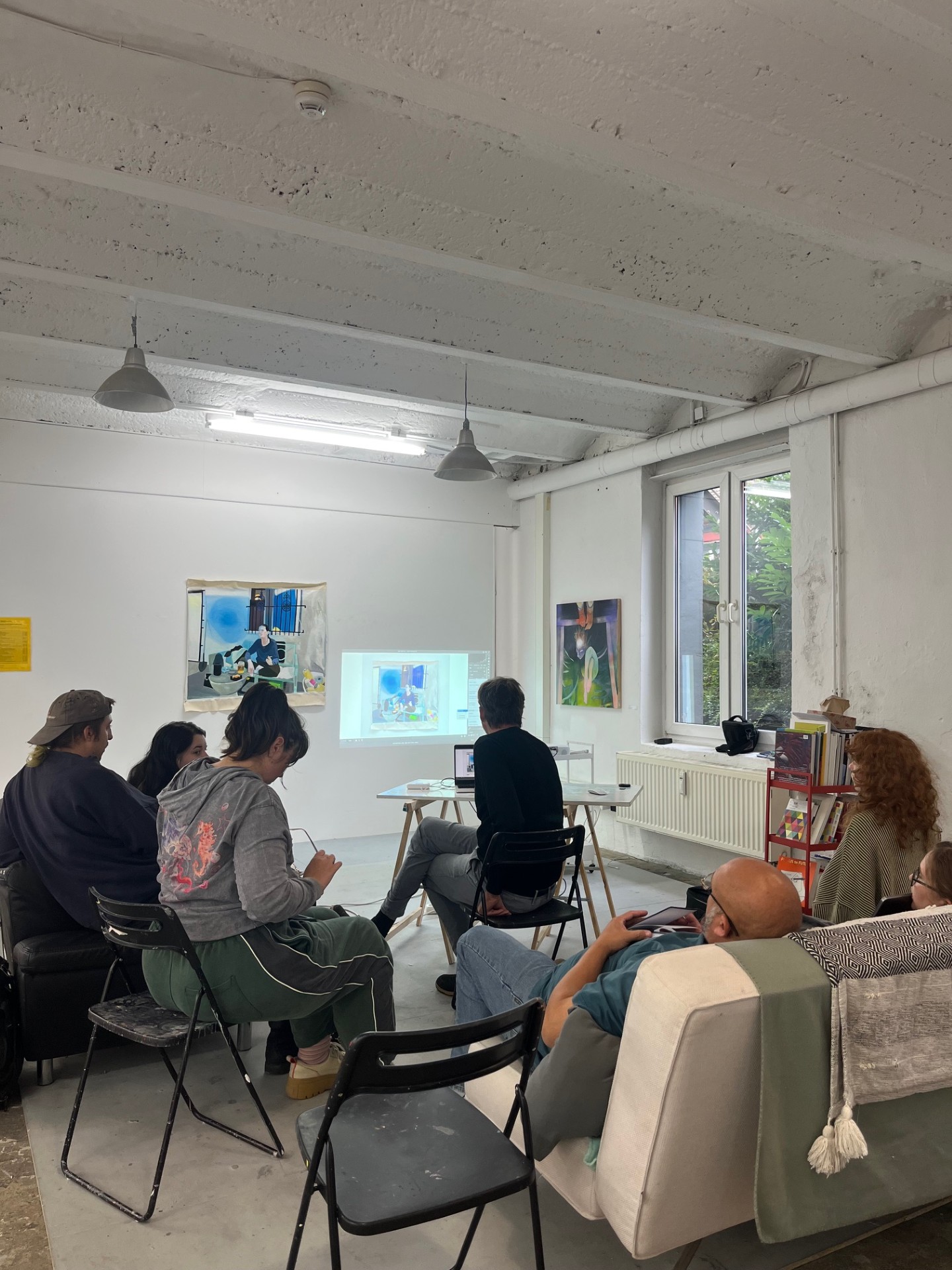
On Tuesday, March 3, 2025, The 1st-year MFA cohort had a group critique at their Düsseldorf studios in Oberbilk. Alongside professors Jutta Haeckel and Stefan Kürten, the students talked about their work, ideas, and future visions. The following day, March 4, 2025, we had our midterm, which included input from German professor Katrin Laade and the Alfred MFA painting staff; including director Stephanie McMahon, Patrick Brennan, and John Chae. The past two days were an intensive dive into our work – we had many minds focused on our art, and many ideas were generated – it is up to us as artists to take what we want from these sessions; to hear the critiques, think about our art and what we want to carry forward.

📸 Max Heaton

On Tuesday, February 25, 2025, the Alfred MFA cohort traveled to Brussels, Belgium by train to explore the city’s rich cultural history in the arts. After settling into our lodging, we head straight to the Oldmasters Museum. Here we were treated to works by Belgian artists Peter Paul Rubens, Pieter Bruegel the Elder, and others of the region, like Dutch painter Hieronymus Bosch.

After taking in the wonders of the Belgian and Dutch masters, we strolled the streets to check out the local gallery scene. We checked out shows of contemporary artists at Galerie Templon, Rodolphe Jannsen, and La Patinoire Royale. 

The next day, Wednesday, February 26, 2025, we visited the René Magritte Museum and were greeted for a private tour. The experience with our guide provided a personal touch, and insight into the man and work – giving us students a richer experience. We finished our day at the Bozar Centre for Fine Arts, another Brussels museum. At the Bozar, we were treated to an incredible group show titled When We See Us – “A kaleidoscopic exhibition that explores a century of Pan-African figurative painting. Themes such as joy, exuberance, daily life, sensuality and spirituality come to the fore in over 140 paintings by a hundred artists.”

📸 Katrin Laade, Max Heaton

On Thursday, February 20, 2025, the Alfred MFA painting cohort visited the Kunstmuseum Gelsenkirchen in Gelsenkirchen to meet with Julia Höner, the museum director, and be guided on a private tour. The building itself was architecturally unique, built in 1984. The museum director stated that the entryway was meant to deliver “breath and space to invite people in, to be a space for the public.” 

We were guided from room to room, and the director provided insight into the works currently on view. The Kunstmuseum Gelsenkirchen holds one of the largest collections of kinetic art in Europe. The exhibitions were designed so that visitors could activate the works themselves, by pressing buttons stationed next to the works, designed to set the art in motion. Such a structure of art exhibition provides a veritable process of discovery. This interaction with the art makes for a playful experience, one that all age groups can enjoy. Educational programming is strong within the museum, often hosting pre-school and elementary school children, who may be having their first interactions with an art institution. 

This engagement with young people is not by accident. The kinetic art on view, a large portion made directly after WWII, was made as art that hoped to rid itself of representation, and away from political means, which would often be in service of government propaganda, The artists making this kinetic work, some the artist group ZERO, had the idea of, in the director’s words, “pushing the art down from its pedestal to become more accessible for the people.” There are a select number of works that the museum encourages its visitors to touch, which in turn impacts the aesthetics of the work.

At the end of the tour, our group visited the basement of the museum – an area converted from storage of kinetic art, into an exhibition space – to see and interact with the work of Alona Rodeh, and their solo exhibition interzone.

📸 Max Heaton